EasyBet Namibia: domain, licence and risk checks

Evidence signal: amber. The first check is not whether a page looks polished, but whether its address is exactly easybet.com.na. A missing letter, added word, different ending or link delivered through an unsolicited message could lead to an unrelated lookalike. Even the exact address does not settle the legal question: the collected records identify the intended local domain, but they do not establish a current primary-record match connecting that domain to a named legal entity and licence.
That gap prevents a green assessment. It does not, by itself, prove that the service is a scam. The responsible conclusion is narrower: the domain is identifiable, Namibia has a licensing framework, and the regulator explains that gambling operators must be licensed, but the required domain–operator–licence chain remains open in the supplied evidence. The local website was also intermittently unavailable during collection, which limited direct checks of account terms, payment disclosures and complaint information.
Verdict: identifiable domain, unresolved licence match
| Question | Evidence-based answer | Practical consequence |
|---|---|---|
| What is the intended Namibian domain? | easybet.com.na | Compare every character before entering credentials or payment details. |
| Is the legal operator established? | No exact legal entity was established in the supplied packet. | Do not infer ownership from the brand name alone. |
| Is a current licence tied to this domain? | No current primary local domain-to-operator match was located. | Treat legality as unconfirmed until a competent current record supplies the chain. |
| Are scam allegations proven? | No. App-user comments include withdrawal allegations, but they are not regulatory findings. | Use them as prompts for verification, not as a verdict. |
| Overall signal | Amber: open evidence. | Verify before depositing, and keep exposure limited while material facts remain unresolved. |
The distinction between “unverified” and “fraudulent” matters. Calling the operation legitimate would overstate the evidence because the legal entity and current licence connection are missing. Calling it a scam would also overstate the evidence because no official adverse finding or corroborated documented fraud record appears in the packet. Amber captures that uncertainty without converting an evidence gap into an accusation.
The lookalike-domain test before login
Begin with the full address shown by the browser, not a logo, search result title or message preview. The intended local hostname is easybet.com.na. A deceptive address can reproduce colours, promotional language and account forms while sending credentials or deposits elsewhere. Check the address again after every redirect, especially when moving from a promotion to registration, login, identity verification or payment.
| Checkpoint | What to inspect | Stop condition |
|---|---|---|
| Hostname | It must read easybet.com.na exactly, without added words or substituted characters. | Any different hostname that is not independently explained and verified. |
| Link source | Prefer a route you have independently identified rather than a shortened link in a message. | An urgent request to log in, pay or “unlock” funds through a new address. |
| Payment recipient | Compare the displayed recipient or merchant name with verified operator details. | A personal account, unrelated recipient or unexplained change of beneficiary. |
| Account recovery | Use contact details independently obtained from a trusted record. | A request for a password, one-time code or remote device access. |
| Licence claim | Demand the licence holder’s full legal name, licence category or number, and a current official match. | A badge or claim that cannot be tied to the exact domain and entity. |
TLS encryption and a padlock are useful transport protections, but they do not prove that a gambling operator is licensed. A lookalike can also use encryption. Likewise, a familiar logo is not ownership evidence. When the website is unavailable, do not switch automatically to an address suggested by a social account, chat agent or search advertisement. Wait until the exact destination and its relationship to the operator can be checked.
What Namibia’s official records establish
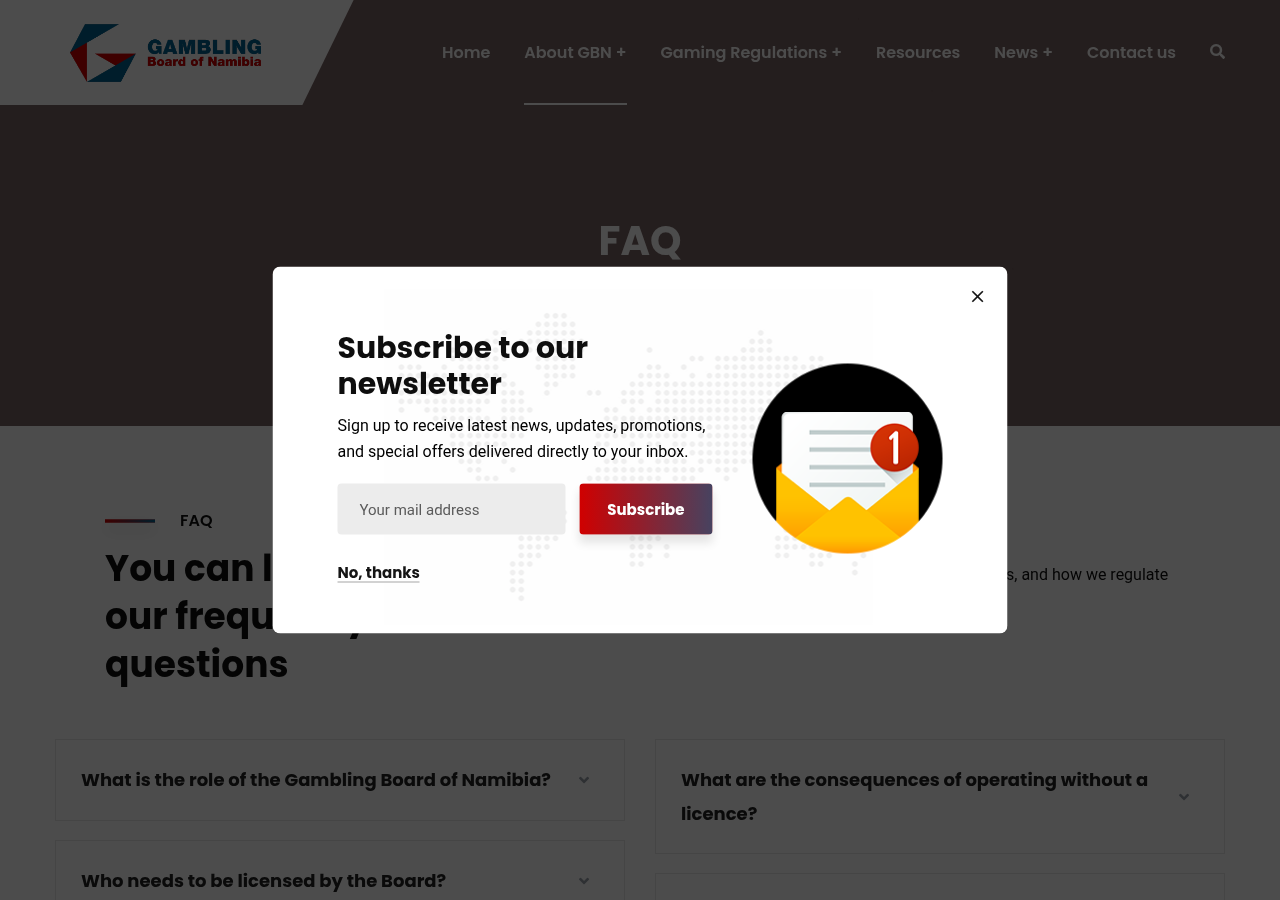
The Gambling Board of Namibia states that gambling operators must be licensed. Its official FAQ also indicates that complaints may be submitted through its contact route with supporting evidence. This establishes the regulatory expectation and a complaint pathway, but it does not supply the missing current match for the reviewed hostname.
The Gambling and Entertainment Control Act record defines gambling, creates licence categories and establishes the Board framework. It is relevant to the legal structure, yet a general statute cannot confirm that a particular website belongs to a particular licensee. That requires a current, entity-specific record.
The Ministry’s casinos and gambling houses information records a former framework, a moratorium and historic licence counts. The material is dated 2016. It provides historical context only and should not be treated as a current online-domain register or proof of present authorisation.
| Record | What it supports | What it does not support |
|---|---|---|
| GBN FAQ | Operators must be licensed; complaints can be submitted with evidence. | A named licence for easybet.com.na. |
| 2018 Act record | Definitions, licence categories and the Board framework. | Current ownership or authorisation of the reviewed service. |
| Ministry information dated 2016 | Historic framework, moratorium and licence-count context. | Present legality, current licence status or domain control. |
| Operator domain record | The intended local address. | The exact legal entity or current regulatory standing. |
Legal or not: the missing three-part chain
A defensible legality check should connect three items: the exact hostname, the legal entity operating it, and a current licence issued or recognised by the competent authority. Here, only the intended hostname is established in the operator-level material. The exact legal entity is not established, and no current primary record in the packet joins that entity and licence to the hostname.
Before treating a licence claim as verified, obtain the holder’s registered legal name, licence number or category, issuing authority, status and any relevant validity information. Then confirm that the official record covers the activity offered and links back to the same operator controlling the local domain. Similar brand names in another country, an app-store listing, a footer badge or an undated certificate image cannot substitute for that match.
The legal answer is therefore “not established by the available records”, rather than “legal” or “illegal”. Readers seeking a repeatable process can use the licence-check procedure. If new primary documentation becomes available, the signal should be reassessed using the exact domain and entity rather than broad brand recognition.
Payments, KYC and account exposure
No supported list of deposit methods, fees, processing times, limits or currencies was supplied. None should be assumed. Website unavailability also prevented a reliable direct reading of the current payment and identity-verification terms. Before depositing, record the method offered, recipient identity, minimum and maximum amounts, fees, chargeback limitations and the rules governing withdrawals to the original funding source.
| Before paying | Evidence to retain | Why it matters |
|---|---|---|
| Recipient check | Merchant or beneficiary name, date, amount and transaction reference. | Shows where funds were sent and assists a bank or complaint reviewer. |
| Terms check | Dated copy of withdrawal, bonus and verification conditions. | Preserves the rules presented when the transaction occurred. |
| KYC request | Requested document type, upload location and privacy notice. | Helps distinguish routine verification from excessive or suspicious demands. |
| Balance record | Account history, deposit receipt and withdrawal request status. | Supports a clear transaction chronology. |
| Support exchange | Case number, full messages, dates and promised resolution. | Demonstrates attempts to resolve the issue directly. |
KYC can be part of a regulated account process, but the existence of a document request is not proof of licensing. Submit sensitive identity material only through a verified destination, and do not send passwords or one-time codes. Be cautious if additional payments are demanded to release a balance, if the payment beneficiary changes without explanation, or if support moves the conversation to an unverifiable private channel. The payment-check checklist covers evidence to preserve before and after a transaction.
Withdrawals and the limits of user reports
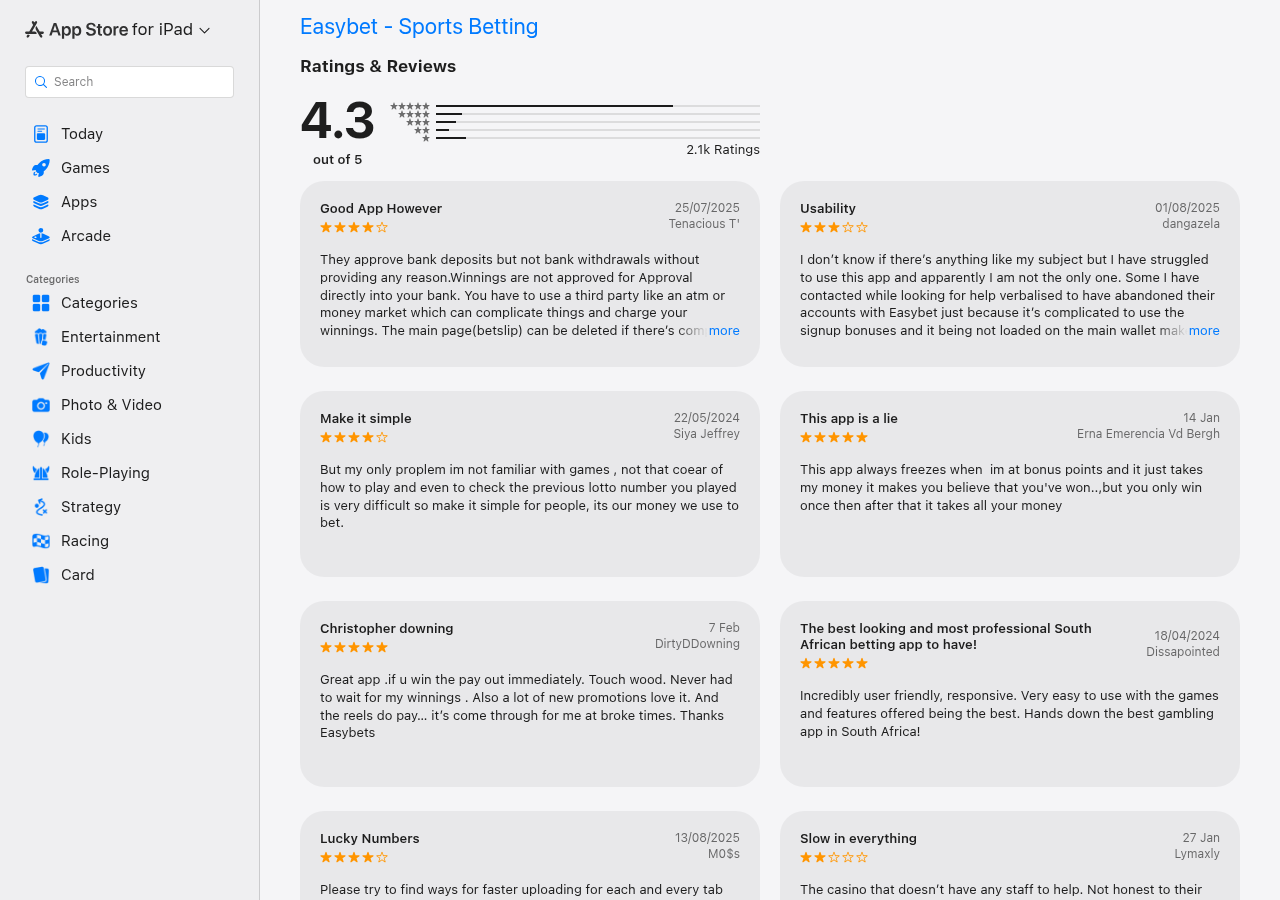
The contextual app-store record displays dated user reviews, including allegations concerning withdrawals. Such comments can reveal questions worth testing, but they do not establish what occurred in a specific account. The reviewer’s identity, account history, compliance status, applicable terms and eventual resolution are not independently established in the supplied evidence. There is also no documented withdrawal test for this dossier.
If a withdrawal is delayed, first preserve the request time, amount, status and stated processing period. Ask support for a written reason and a list of any outstanding verification requirements. Do not repeatedly cancel and recreate a request unless the terms or support instructions clearly justify it. If the reason changes, an unexplained fee is demanded, or access disappears, retain each message and transaction record.
A single negative comment should not be converted into a general verdict. Conversely, positive ratings do not resolve the missing licence match. The appropriate approach is transaction-specific: compare the operator’s written terms with the account chronology, separate pending KYC from an unexplained refusal, and escalate with organised evidence when direct resolution fails.
Continue through the catalogue
Complaint route and recovery steps
Start with a concise written complaint to the service. Include the account identifier, disputed amount, transaction references, relevant dates, the outcome requested and copies of supporting records. Avoid sending more identity material than is necessary. Request a case number and a written final response. A chronological file is more useful than disconnected screenshots.
- Secure the account and associated email; change reused passwords and review active sessions.
- Save balances, transaction histories, terms, messages and the exact hostname used.
- Contact the payment provider promptly if a transaction was unauthorised or misdirected.
- Submit a formal operator complaint and retain its reference number.
- If unresolved, use the regulator’s contact route and attach supporting evidence, as described in the GBN FAQ.
- Report suspected impersonation separately, making clear which hostname, recipient and communication channel were involved.
The internal complaint guide helps structure the chronology. If the issue involves a lookalike address, false payment request or credential theft, use the scam-warning checks as well. Recovery is never guaranteed. Anyone claiming guaranteed retrieval in exchange for an upfront fee should be independently verified before receiving money or documents.
Evidence chronology and unresolved questions
| Date checked | Evidence item | Result |
|---|---|---|
| 2026-08-28 | GBN FAQ | Confirmed general licensing requirement and evidence-supported complaint route. |
| 2026-08-28 | NamibLII Act record | Confirmed statutory definitions, licence categories and Board framework. |
| 2026-08-28 | Ministry information | Confirmed historic material dated 2016; not treated as current domain proof. |
| 2026-08-28 | Local operator domain | Identified easybet.com.na; access was intermittent during collection. |
| 2026-08-28 | App-user review context | Located withdrawal allegations; treated as unverified user context. |
Material questions remain unanswered: the full legal name of the local operator, the current licence identifier and status, the official record connecting both to the domain, current payment terms, KYC requirements, withdrawal timelines and the operator’s formal complaint escalation path. These omissions drive the amber signal. They should not be filled with information from a similarly named operation in another jurisdiction.
The assessment follows an evidence hierarchy: current competent-authority records first, operator statements second, and user reports as context only. Availability, branding and popularity are not substitutes for a licence match. The complete approach is described in the evidence methodology.
Safer decision and correction path
Until the domain–entity–licence chain is confirmed, avoid treating promotional language as proof of safety. Verify the hostname, ask for the exact legal operator and licence details, compare those details with a current official record, and understand the withdrawal and verification rules before risking funds. Set a strict spending limit and never chase losses. Support for controlling gambling is available through the responsible-gambling resources.
If proceeding despite the unresolved evidence, use only the independently identified route, minimise initial exposure, retain every transaction record and do not reuse a password. The single commercial route is Review checked routes; its inclusion is not a licence confirmation or guarantee of withdrawals.
Corrections should identify the disputed statement and provide a current primary record showing the exact hostname, legal entity and licence status. Operator screenshots or assertions may add context, but a green signal requires current primary support for the precise match. Evidence can be submitted through the contact route. Changes should preserve the distinction between official records, operator claims and user allegations.
Frequently asked questions
Is EasyBet a scam or legit in Namibia?
The supplied evidence does not prove a scam, but it also does not establish a current primary-record match between easybet.com.na, an exact legal operator and a licence. The appropriate signal is amber while that chain remains unresolved.
What is the intended EasyBet Namibia domain?
The operator-level record identifies easybet.com.na as the intended local domain. Check every character before logging in or paying, and do not assume that a similar address, logo or search advertisement belongs to the same operator.
Is EasyBet licensed in Namibia?
No current primary local record supplied here ties the exact domain to a named legal entity and licence. Namibia’s regulator says gambling operators must be licensed, but that general rule is not proof for this specific service.
Do user reviews prove withdrawal problems?
No. The app-store capture contains dated withdrawal allegations, but user reports are contextual and not regulatory findings. No independent withdrawal test or account-level verification was supplied.
What should I do if a withdrawal is delayed?
Save the request status, amount, transaction history, applicable terms and all support messages. Ask for a written reason and case number, complete only clearly explained verification, and escalate through the regulator’s complaint route with supporting evidence if direct resolution fails.
How can the amber signal change?
A green signal would require current primary evidence connecting the exact domain, legal entity and valid licence. An official adverse record or corroborated documented evidence could support red. Until either threshold is met, open evidence remains amber.
FNB Namibia